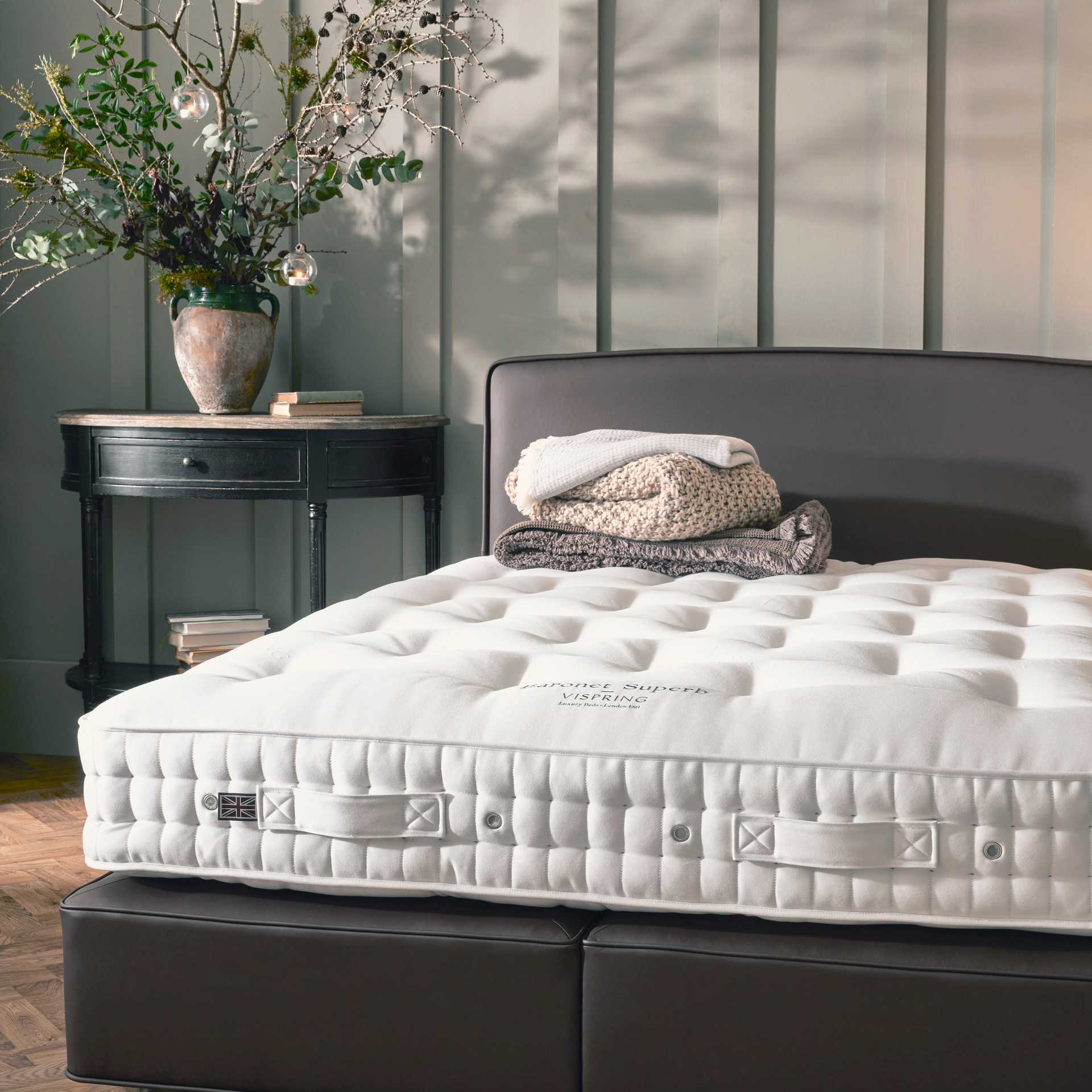
Bedding · Mattress construction
Aireloom Mattress Construction: Understanding Comfort Layers and Support
A mattress is a layered system, not simply a soft surface over a firm base. In Aireloom mattresses, the materials above and around the support core influence cushioning, responsiveness, temperature, and how stable the bed feels over time. Knowing what each layer does makes it easier to compare models by construction and comfort—not by a name or showroom impression alone.
Read a mattress from the surface down
Imagine a sleeper settling onto a mattress. The uppermost fabric is the first point of contact, but it contributes only one part of the sensation. Beneath it, comfort materials compress around the body. Transition layers manage the passage from that cushioning into the deeper support system. Finally, the core carries most of the load and helps determine how the mattress responds when a person shifts position.
These layers act together. A plush top cannot tell the whole story if the layers beneath it feel firm or resist movement. Likewise, a supportive core may feel very different depending on how much cushioning covers it. This is why mattress construction matters: it helps explain the relationship between an initial impression and the support a sleeper experiences across a full night.
Aireloom mattress specifications can vary by model and collection, so construction should be checked model by model. Materials, thicknesses, firmness descriptions, and support details should not be assumed to be identical across a brand. The useful question is not simply, “What does this mattress contain?” It is also, “How might these components work together for my body, sleep position, and preferred feel?”
The cover and the first impression
The cover, sometimes called the ticking, encloses the mattress and forms its immediate surface. Its fabric, quilting, and any padding attached to it can affect how the top feels when someone first lies down. A quilted or cushioned cover may create a softer first impression; a flatter, more elastic surface may let the layers beneath be felt more directly.
That first impression is useful, but it should not be confused with the full comfort profile. A surface can feel inviting for a few moments yet behave differently after the body has rested on it longer. When testing a mattress, take time to settle into a natural sleeping position. Notice whether the shoulders, hips, and lower back feel comfortably supported rather than judging only by the softness of the fabric.
Cover construction can also influence airflow and how easily the surface moves with the body. A stretchable textile may allow the comfort layers to respond without much resistance, while a more structured cover can make the top feel less yielding. These are subtle differences, but they help explain why two mattresses with broadly similar firmness labels can feel unlike one another.
Comfort layers: cushioning, contouring, and pressure
Comfort layers sit near the top of the mattress and shape the sensation of lying down. Depending on a model’s construction, they may use foam, fibers, latex, or other cushioning materials. Their job is not merely to make a bed feel soft. They help distribute pressure, soften the transition from the body to the support core, and influence how readily a sleeper can shift position.
When a material compresses under a shoulder or hip, it can reduce concentrated pressure at that point. But the amount and character of cushioning matter. A shallow, responsive layer may give a gently padded feel while allowing movement to remain easy. A deeper or slower-responding layer may create a more enveloping sensation. Neither character is automatically better; the right choice depends on personal comfort and the way the sleeper’s body meets the mattress.
Body weight affects how a comfort layer is experienced. A lighter sleeper may not compress a firm surface enough to reach its cushioning, while a heavier sleeper may sink farther through the same layers. This is one reason online firmness descriptions and quick showroom tests can only provide a starting point. Individual proportions, sleep habits, and comfort preferences also shape the result.
Pay attention to how pressure feels across more than one area. Side sleepers often notice the shoulder and hip first because these parts meet the bed more directly. Back sleepers may focus on whether the surface cushions the hips while supporting the lower back. Stomach sleepers may be especially aware of excessive sinking through the middle of the body. These are practical observations, not rigid rules: people vary, and a mattress must be judged by how it feels to the person using it.
Transition layers: the bridge between comfort and support
Between the upper cushioning and the support core, a mattress may include one or more transition layers. These form a bridge: they soften the change from surface comfort to deeper resistance and help determine how far the body settles. Without considering this middle zone, it is easy to over-credit the top layer for a sensation that actually comes from several materials working in sequence.
Transition layers can influence whether a bed feels gradual and cushioned or more directly supportive. They may also affect how movement travels through the mattress and how quickly the surface responds when a sleeper turns. When comparing Aireloom mattresses, look for clear information about the materials and placement of these layers, rather than relying only on phrases such as “plush,” “cushion firm,” or “supportive.” Such terms summarize a feel; they do not explain the construction that produces it.
If a specification does not clearly describe the layers, ask for the model’s detailed construction information. Confirm which materials are used, where they sit, and whether the details apply to the exact size and version being considered. Model names can sound similar while concealing meaningful differences in feel or design.
The support core and the meaning of stability
The support core is the deeper foundation of the mattress. It helps hold the body, supports the upper layers, and contributes to the overall sense of stability. Different core designs can produce distinct responses: some may feel buoyant and quick to recover, while others may feel more controlled or less springy. To understand an Aireloom model, verify its specific support construction rather than assuming every mattress in a brand’s range uses the same system.
Support and firmness are related, but they are not interchangeable. Firmness usually describes the initial or overall feel at the surface. Support concerns how the mattress carries the body and helps maintain a comfortable posture. A mattress can feel soft at first contact yet provide substantial resistance deeper down. Another may feel firm at the surface but still not suit a particular sleeper if it does not cushion their pressure points adequately.
Stability also involves the usable surface. Consider whether the mattress feels consistent from the center toward the edges, especially if two people share the bed or if one sleeper often sits near the perimeter. Ask about edge construction and how the model is designed to perform under everyday use. These details can affect the practical sense of space and ease of getting in and out of bed.
Firmness is personal—and position is only one clue
Sleep position offers a helpful framework for narrowing choices, but it does not prescribe one universal firmness. Side sleepers may prefer enough cushioning around the shoulder and hip to reduce pressure, while still wanting the torso to feel supported. Back sleepers often look for a balance that cushions the body without allowing the middle to settle uncomfortably. Stomach sleepers commonly pay attention to whether the pelvis sinks too far, though personal comfort remains decisive.
Combination sleepers move between positions, so responsiveness and ease of turning may matter as much as surface softness. A deeply conforming feel may be welcome to one person and restrictive to another. Couples may need to consider not only each individual’s preferred firmness but also whether the mattress limits disturbance when one person moves. The best comparison begins with real sleeping habits, not a generic label attached to a category of sleeper.
Use firmness terms as relative descriptions, not measurements that mean exactly the same thing across manufacturers. A “medium” from one collection may not feel like a “medium” from another. Even within a single brand, different layer combinations can change the sensation. When possible, compare the specific model in person and spend enough time lying in the position you normally use.
Temperature, airflow, and the sleep surface
Temperature comfort is influenced by the whole bed environment: room conditions, bedding, sleepwear, body temperature, and mattress construction all play a part. Materials near the surface may affect how warm or cool the mattress feels, while the arrangement of layers can influence how easily heat and moisture move away. Product descriptions can point to relevant materials, but they cannot guarantee how a particular person will sleep.
When comparing models, note the cover fabric and the stated materials in the comfort layers. Consider whether your current bedding might be contributing more to warmth than the mattress itself. A breathable sheet or a lighter comforter can change the experience, and a mattress protector may also alter the feel or airflow of the surface. This context makes it easier to interpret a showroom impression fairly.
Cooling claims deserve careful reading. Look for an explanation of the construction feature behind a claim, and distinguish a material’s potential properties from a promise about individual results. A comfortable temperature is personal and depends on more than one layer of foam, fiber, or fabric.
A practical way to compare Aireloom mattresses
Rather than beginning with a model name, build a simple comparison around construction and feel. Keep notes on the exact model, the materials listed, the firmness description, and the way your body responds. If specifications are available, compare the surface, comfort layers, transition layers, and core as separate parts of one system.
- Start with your routine. Record your usual sleep positions, whether you change position often, and what currently feels uncomfortable or comfortable.
- Check the exact model. Confirm the model name and version, then ask for construction details that apply to it specifically.
- Test your natural position. Lie down as you normally sleep. Give the surface time to settle instead of making a decision after a brief touch.
- Notice pressure and alignment. Ask whether the shoulders, hips, and back feel cushioned and stable, without assuming one sensation proves a medical benefit.
- Try more than one position. If you are a combination sleeper, see whether rolling and settling again feels natural.
- Compare the whole bed. Consider the foundation, frame, protector, and bedding because each can influence how the mattress feels.
- Review practical terms. Before purchase, check trial or return conditions, warranty coverage, delivery details, and care instructions.
A useful comparison is specific: “This model feels more yielding at the shoulder, while that one responds more quickly when I turn.” Such observations are more informative than deciding that a mattress is simply “good” or “bad.” Comfort is individual, and the goal is to find a construction that suits your needs consistently.
What a showroom test can—and cannot—tell you
A showroom lets you experience the first response of a mattress and compare models under similar conditions. It can reveal whether a surface feels too firm, too soft, or unexpectedly restrictive. It can also help you notice differences in bounce, cushioning, and edge feel. However, a few minutes in a store cannot reproduce a full night’s sleep or account for every bedroom condition.
Take a moment to settle, breathe normally, and check whether you feel comfortable without continually adjusting your position. If you share a bed, both sleepers should test the mattress when practical. Different bodies may compress the same layers in different ways, so a model that seems ideal to one person may feel different to the other.
Ask questions when a specification is unclear. Useful points include the construction of the comfort and support layers, the intended foundation, care requirements, and the exact terms of any in-home trial or warranty. Clear answers help distinguish a marketing description from details that can guide a sound decision.
Construction is not a substitute for individual fit
Materials and layers help explain how a mattress is designed to feel, but they cannot predict comfort perfectly. Body shape, sleep position, personal sensitivity to pressure, preferred temperature, and the base beneath the mattress all influence the experience. A construction feature that works well for one sleeper may feel distracting to another.
It is also important not to treat mattress language as medical advice. A mattress may feel more comfortable or supportive to an individual, but product descriptions alone cannot diagnose or treat pain. If you have persistent discomfort or a health concern affecting sleep, consider seeking guidance from a qualified health professional.
Finally, durability depends on more than a material name. Construction quality, usage, care, the supporting foundation, and the sleeper’s needs all matter. Review the manufacturer’s care instructions and warranty terms, and make sure the frame or foundation is compatible with the model. Proper support beneath the mattress can help it perform as intended.
The useful question: how do the layers work together?
Understanding Aireloom mattress construction means looking beyond the softness of the top or the prestige of a model name. The cover shapes first contact; comfort materials cushion and contour; transition layers guide the body toward deeper resistance; and the support core gives the mattress its foundation. Firmness, temperature, edge stability, and ease of movement emerge from the interaction among these parts.
When you compare mattresses, begin with how you sleep and what you want to feel. Then verify the construction of the specific model, test it in a natural position, and consider the foundation and bedding that will complete the setup. This measured approach turns a crowded field of descriptions into a clearer set of choices—and helps you judge a mattress by how its design meets your own needs.